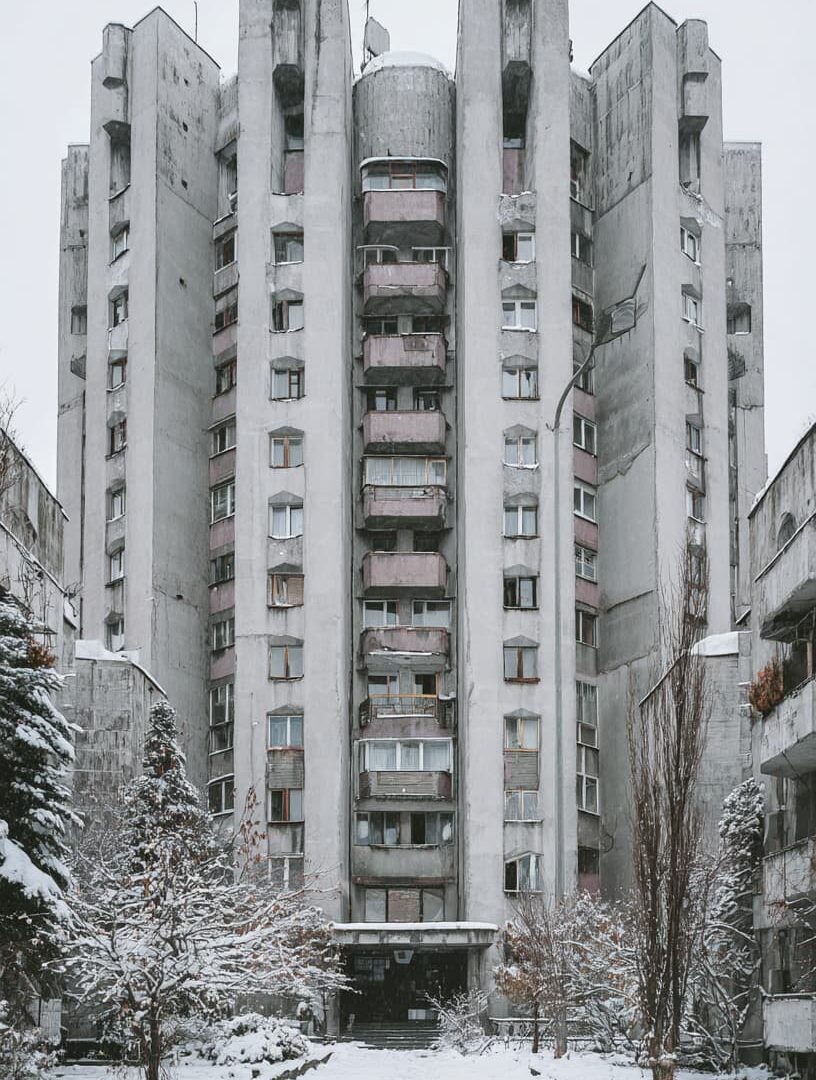
Across social media platforms, photography accounts, design magazines, and architecture communities, a strange cultural phenomenon has become increasingly visible over the last few years. Buildings constructed during socialist Yugoslavia — once treated as outdated remnants of a vanished political system — are attracting enormous attention from young people who were born long after Yugoslavia itself disappeared.
Massive concrete memorials, futuristic housing complexes, geometric cultural centers, abandoned hotels on the Adriatic coast, and experimental urban structures from the 1960s and 1970s are now circulating widely across Instagram, TikTok, Pinterest, YouTube, and architecture forums. What was once considered old infrastructure is increasingly being reinterpreted as aesthetic inspiration, cultural memory, and even a form of lost futurism.
Interestingly, many of the people most fascinated by Yugoslav brutalist architecture have no direct personal connection to Yugoslavia at all.
They never lived inside the socialist federation. They did not experience its political system, daily routines, or economic contradictions. Yet they are deeply drawn to the visual identity of spaces created during that period. This growing fascination says as much about the present moment as it does about the architecture itself.
Why Yugoslav Brutalism Feels Different
Brutalist architecture exists in many countries, but Yugoslav brutalism developed a distinct visual identity that continues to stand apart from both Soviet monumentalism and Western modernism. Many Yugoslav architects experimented with unusually bold forms, sculptural geometry, and futuristic public spaces that blended utopian ambition with regional cultural identity.
The result was architecture that often looked strangely timeless.
Large concrete structures appeared simultaneously futuristic and nostalgic. Cultural centers resembled science-fiction monuments. Hotels along the Adriatic coast combined modernist minimalism with dramatic landscapes. Memorial complexes looked more like abstract art installations than traditional political monuments.
For younger generations raised inside globally standardized urban environments, these buildings feel radically different from contemporary architecture.
Modern cities increasingly rely on predictable glass towers, commercial minimalism, and globally interchangeable design language. Yugoslav brutalist spaces, by contrast, often feel emotionally charged, experimental, and physically expressive. Even when deteriorating, they retain a sense of ambition rarely visible in many modern urban developments.
This visual intensity plays a major role in their online popularity.
Social Media Turned Yugoslav Architecture Into Visual Culture
Digital platforms transformed the way younger generations discover architecture. Earlier interest in brutalism was largely academic or professional. Today, architecture increasingly spreads through visual culture itself.
A single image of a Yugoslav spomenik or abandoned concrete hotel can circulate globally within hours.
Social media rewards striking imagery, unusual geometry, atmospheric ruins, and spaces that feel emotionally cinematic. Yugoslav brutalist architecture fits perfectly into that ecosystem. Fog, concrete, symmetry, decay, and oversized forms create powerful visual experiences even outside historical context.
Importantly, online audiences often encounter these structures aesthetically before understanding them politically.
Many younger viewers first see Yugoslav architecture not as socialist infrastructure, but as:
- retrofuturism;
- analog futurism;
- abandoned modernity;
- post-utopian aesthetics;
- cinematic space.
This changes the emotional meaning of the architecture itself.
Buildings originally created within a specific political and social system are now being reinterpreted through digital visual culture, photography trends, fashion aesthetics, music videos, and speculative nostalgia.
The Appeal of “Lost Futures”
Part of the fascination also comes from a broader cultural mood. Many younger generations feel increasingly disconnected from optimistic visions of the future. Contemporary urban life often feels economically unstable, environmentally uncertain, and architecturally repetitive.
Yugoslav brutalist architecture represents a very different psychological atmosphere.
Even its most unusual structures often projected confidence in collective progress, technological experimentation, and long-term public infrastructure. Whether or not those ambitions succeeded politically, the architecture itself still communicates belief in the future as something society could intentionally build.
Modern architecture rarely carries that same emotional energy.
Many contemporary urban developments prioritize efficiency, real estate optimization, and commercial practicality. Yugoslav brutalism, despite its flaws, often appears more idealistic and culturally ambitious by comparison. Younger audiences increasingly interpret these buildings as symbols of an era when architecture still attempted to express collective imagination.
This helps explain why many online discussions describe Yugoslav structures as “future visions from a world that never arrived.”
Architecture as Nostalgia Without Memory
One of the most unusual aspects of this trend is that it involves nostalgia without direct personal experience. The people most fascinated by Yugoslav brutalism often feel nostalgic for a historical atmosphere they never actually lived through.
This form of cultural nostalgia is becoming increasingly common in digital culture.
Younger generations regularly romanticize periods associated with:
- analog technology;
- physical public spaces;
- slower urban rhythms;
- distinctive design identities;
- collective social environments.
Yugoslav architecture fits naturally into that emotional landscape because it visually represents a world that appears less standardized than contemporary global cities.
The fascination is therefore not necessarily political in a traditional sense. Many young people interested in Yugoslav brutalism are not attempting to revive socialism itself. Instead, they are responding to architecture that feels more experimental, more emotionally expressive, and more culturally specific than much of today’s urban development.
The buildings become symbols of alternative modernity.
The Role of Ruins and Decay
Abandonment also contributes heavily to the appeal. Many Yugoslav structures now exist in partially decayed or underused states. Hotels remain unfinished, memorial complexes deteriorate, and public buildings stand disconnected from their original social purpose.
Decay changes how architecture is perceived.
Ruined structures invite imagination because they appear suspended between past and future. Younger audiences often encounter Yugoslav brutalism through photographs emphasizing emptiness, weather damage, overgrown vegetation, and fading concrete surfaces. These images create emotional ambiguity. The buildings feel simultaneously powerful and fragile.
This atmosphere aligns closely with contemporary internet aesthetics centered around:
- liminal spaces;
- abandoned modernism;
- post-industrial melancholy;
- analog futurism;
- urban memory.
Yugoslav architecture therefore circulates not only as historical material, but as emotional visual language.
Local Memory Versus Global Fascination
Interestingly, the international fascination with Yugoslav brutalism sometimes contrasts sharply with local attitudes in the Balkans themselves. For many people who actually lived through the late Yugoslav period and its collapse, these structures are connected to complicated political memories, economic decline, and post-socialist transition.
Global audiences often view the architecture more romantically than local populations do.
This creates a tension between lived history and aesthetic reinterpretation. Buildings once associated with ordinary bureaucracy or ideological systems are now photographed as artistic monuments by visitors searching for visual uniqueness.
Yet this reinterpretation may also help preserve structures that would otherwise disappear completely. International interest has contributed to renewed documentation, digital archiving, photography projects, restoration discussions, and architectural research focused on Yugoslav modernism.
The Return of Architectural Identity
Ultimately, the growing fascination with Yugoslav brutalist architecture reflects a deeper cultural desire for spaces with stronger identity and emotional presence. Younger generations increasingly feel surrounded by cities that look interchangeable regardless of country or region.
Yugoslav architecture resists that sameness.
Its buildings remain visually specific, culturally rooted, and emotionally recognizable even decades after the political system that produced them disappeared. In a world dominated by algorithmic design trends and globally standardized urban development, these concrete structures now appear strangely human in their ambition.
For many young people, the appeal is not only historical. It is about searching for traces of a future that once imagined cities differently.